Climate and Economic History
Economists and economic historians accept that geography matters for economic change, but few examine closely how it matters. As a result, climate and geology remain insufficiently connected to historical analysis. Moreover, the usual distinction between natural resource scarcity and abundance does not work well when climate affects societies through seasonal cycles of shortage and excess. My research aims to show more clearly how climate has shaped patterns of economic change.
I show that climate is not simply a backdrop to economic change but a major force shaping development. My research focuses on tropical and monsoon regions, especially in South Asia and Africa, where water scarcity, seasonal rainfall, floods, and droughts profoundly influenced economic growth and social organization. By tracing responses through irrigation, water extraction, technological innovation, and institutional reform, I show that development followed ecological pathways distinct from those of temperate Europe. This work offers a new framework for understanding the historical relationship between environment, climate, and prosperity.
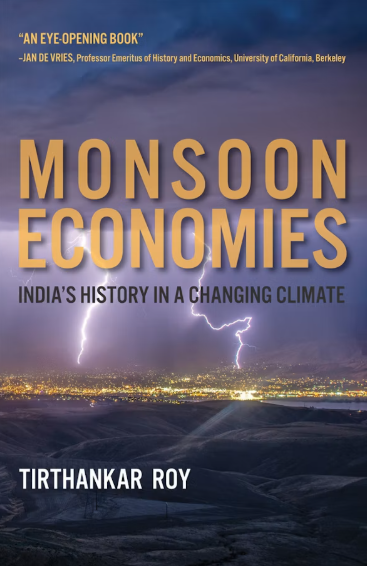
Monsoon Economies (MIT Press 2023) places water at the centre of South Asia’s economic history. It argues that the struggle to overcome monsoon-driven water scarcity shaped growth, social change, and living standards, making water as fundamental to South Asia’s development as fossil fuels were to Western industrialization.
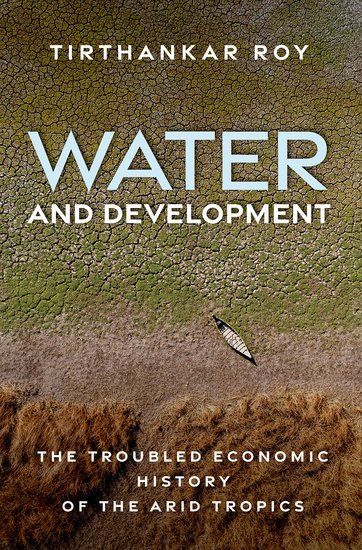
Water and Development: The Troubled Economic History of the Arid Tropics (OUP 2025) explores how climate has shaped economic change across the tropical world. Through a comparative history of non-Western societies, it argues that scarcity and uncertainty of water help explain why many tropical regions have struggled to sustain economic growth and development.