Economic History of European Colonialism - British Empire
My work on colonialism, a big part of it developed in collaboration with Leigh Gardner of the London School of Economics and Ewout Frankema of Wageningen University, challenges interpretations that explain economic outcomes primarily through imperial intentions or exploitation. Instead, I/we argue that the effects of European rule emerged from the interaction of colonial institutions with local geography, indigenous economic structures, and market forces. Focusing on Asia and Africa, I/we show how limited state capacity often made local conditions decisive, producing diverse patterns of growth, inequality, and social change. A comparative perspective reveals that empire generated varied outcomes, underscoring diversity rather than uniformity in the economic consequences of colonial rule.
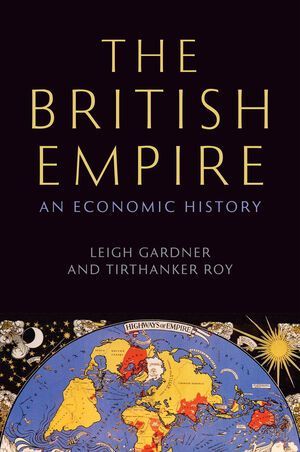
The British Empire: An Economic History (with Leigh Gardner, Polity, 2026) challenges simple views of empire as either beneficial or exploitative. Through a comparative global perspective, it shows how trade, migration, capital flows, local institutions, and geography created diverse colonial experiences, shaping uneven patterns of growth, inequality, and long-term development across the British world.
Origins of Colonialism (2025) argues that British rule in India emerged from a shift of economic and political power from the inland to the coast. As port cities became centres of trade, finance, and enterprise, Indian capital, commercial networks, and geography helped shape the foundations of empire.
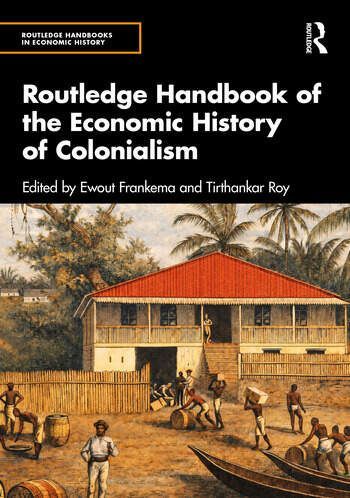
Routledge Handbook of the Economic History of Colonialism (edited with Ewout Frankema) brings together leading scholarship to explain colonialism as a diverse and contingent process. Emphasizing local elites, institutional constraints, geography, and pre-colonial conditions, it shows why colonial rule produced varied economic transformations and enduring legacies of development and inequality.